








Choosing the right executive search partner isn’t just about filling a role, it’s about protecting your brand, securing leadership impact, and investing in long-term success. Yet too often, businesses don’t ask the questions that reveal what’s really behind the scenes. Here are five questions that separate strategic partners from transactional vendors and why they matter more than ever in today’s fast-moving hiring landscape. 1. Who is delivering the work and how will they represent your brand? In many firms, the person who sells the project isn’t the one leading it. Delivery is often pushed down to junior consultants with limited sector experience. At Wavecrest Talent, every project is led by senior experts. Adam Graves or Mike McGrory are directly involved, representing your brand with authority. Ask: • Have you met the person leading the search day-to-day? • What are their credentials, networks, and sector knowledge? • Will they represent your brand with authority in a competitive market? Because in executive search, the person doing the outreach is your ambassador. You need someone who understands your business, speaks your language, and can engage top-tier talent with confidence. 2. How flexible is your pricing and engagement model and does it reflect the value you need? Rigid retainers and one-size-fits-all contracts rarely reflect today’s reality. You deserve a model that adapts to scope, urgency and complexity. Our pricing is transparent and reflects both quality of delivery and long-term impact. But it’s not all about price. It’s about clarity, fairness, and value. Transparent pricing should reflect the quality of delivery, the depth of expertise, and the long-term impact of the hire not just the transaction. 3. What makes your approach different and do you truly believe it? If the answer sounds rehearsed or vague, that’s a red flag. Differentiation isn’t just about process slides, it’s about intrinsic passion, deep sector understanding, and a drive to deliver maximum value. A credible partner should be able to articulate, clearly and confidently, why their model is built differently, how it adapts to your needs, and why they care about the long-term impact of every hire. If they can’t convince you they believe in their own approach, they won’t convince top-tier talent either. 4. How does my assignment fit into your current workload? Attention and focus matters. You’re not just buying a service; you’re investing in urgency and effort. Ask how your search fits alongside other active assignments. How will it be prioritised? Who’s accountable for delivery timelines and candidate experience? Transparency here is critical. You deserve to know whether your search is front-of-mind or buried beneath competing priorities. We recommend weekly checkpoints to discuss progress and to stay up to date with candidates who are emerging from search activity early on. At Wavecrest Executive we prefer to collaborate with our Clients to utilise their credible expertise and insights as we go, not wait until the shortlist reveal, that’s a missed opportunity. 5. How do you define and measure long-term fit? Placing a candidate is only the beginning. The real test of executive search is whether that leader thrives, stays and makes a meaningful impact over the long term. Fit is about more than skills and experience. It’s about values, culture and leadership style aligning with where your organisation is heading. At Wavecrest Executive, we build long-term fit into our process from the very start: Discovery sessions: We spend time with you upfront to understand culture, leadership expectations and future goals. Holistic assessment: Beyond technical expertise, we evaluate leadership style, cultural compatibility and long-term potential through structured interviews, references and specialist tools where needed. Evidence-led shortlists: We don’t just provide profiles. We demonstrate how each candidate aligns with your strategy, values and vision for the future. Post-placement follow-up: Once a leader is in role, we check in with both you and them to make sure integration is smooth and impact is being delivered. Co-founders Adam Graves and Mike McGrory know first-hand the cost of a mis-hire financially, culturally and strategically. That’s why Wavecrest Talent is committed to ensuring every placement is not just a short-term success, but a long-term asset for your business. it’s the performance that follows. 🔍 Final Thought At Wavecrest Executive, we built our model to answer these questions before you even ask. Senior-led delivery. Transparent pricing. Deep sector expertise. And a partnership approach rooted in listening, innovation, and guaranteed results. We don’t just place candidates. We solve leadership challenges with precision, pace, and purpose.

Shipping is not new to decarbonisation, performance optimisation, or digital tooling. The industry has been working on fuel efficiency, emissions monitoring, voyage optimisation, and hull and propulsion improvements for well over a decade. What has changed is the pace, the maturity of the technology, and the number of specialist ventures now focused on solving very specific parts of this challenge. Start ups are building advanced tools in performance benchmarking, digital twins, fuel and emissions analytics, and vessel efficiency, supported by practical application across fleets worldwide. This ecosystem is inherently global. Vessels trade across continents. Software is deployed fleet wide. Ownership, technical management, crews, yards, and suppliers operate across different countries and regulatory environments. The supply chain that carries innovation into practice is as complex as the ships themselves. The biggest constraint in this space is rarely the idea, the funding, or the technology. It is people and leadership. Between Two Worlds. These ventures sit between two very different environments. On one side, product development cycles, data led thinking, and investor expectations that demand pace and clarity. On the other, a cautious, experience driven shipping industry where trust and operational credibility determine whether something is adopted at scale. Adoption decisions involve seafarer populations and their shore side superintendents, technical and fleet directors, shipyards, complex supply chains and finance stakeholders, often spread across multiple regions. Bridging this divide requires a very specific type of leader. What Leadership Looks Like in This Environment The leaders who make innovation stick in maritime start ups are not the typical maritime executive profiles. They tend to share a blend of: Practical insight into vessel operations and technical management Intense curiosity about data, performance, and how technology can improve outcomes Commercial credibility with shipowners, operators, and investors Comfort operating in the ‘grey zone’, decisive and forward leaning Expert relationship owners across borders, cultures, and complex supply chains These individuals often sit at the intersection of operations, product, and commercial strategy. They are rarely visible through conventional hiring channels and are often not actively considering a move. Why This Matters to Investors and High Growth Ventures For founders and venture teams backing maritime innovation, the real risk is not always the technology. It is whether the organisation can carry that capability into the market in a way the industry trusts. Early leadership choices influence adoption, credibility, and the story that unlocks future growth. Post acquisition, the challenge evolves again as leadership capability needs to scale across geographies and support workforce mobility across global operations. At each stage, the key question is not who has done the job before. It is who can connect product capability with maritime reality and market confidence. A Quiet Competitive Advantage In a sector defined by global supply chains, workforce mobility, and decarbonisation pressure, leadership is the true multiplier. For founders, investors, and leadership teams, the challenge is not awareness that this talent exists. It is knowing where to find it, how to engage it, and how to assess it properly against the very specific realities of maritime operations and technology growth. This is rarely solved through advertising or traditional recruitment. The individuals who bridge vessel operations, data driven thinking, and commercial credibility are often deeply embedded in consulting firms, technology and digital ventures as well as some of the more traditional and larger shipowners, ship managers, technical organisations and service providers (classification, engineering, regulatory). They are not actively looking and they do not always recognise themselves as start-up profiles. A structured, evidence led search approach allows this leadership population to be mapped, engaged, and assessed with context. Not only against a job description, but against the operational, commercial, and cultural environment the venture sits within. For the VC community, this becomes relevant before investment as part of leadership due diligence. Post acquisition, it supports integration and scaling across geographies. For fast growing start-ups, it provides access to leadership capability that can translate technical innovation into trusted industry adoption. In this part of the maritime ecosystem, identifying the right leaders early is not a hiring task. It is a strategic advantage. Talk to an Expert To learn more about how we support maritime technology ventures, investors, and leadership teams through our Talent Solutions and Executive Search services, please visit:

The maritime and shipping industries are changing faster than at any point I can remember. Not just in terms of market cycles, but in how companies operate, what skills they value, and where long-term career security is coming from. At Wavecrest Talent, we spend every day speaking with shipowners, operators, ports, energy companies, OEMs and technology providers. Equally important, we spend our time listening to candidates who are trying to make sense of where the market is going and how to position themselves within it. Regulation is now shaping careers, not just compliance teams Environmental regulation is no longer something handled quietly in the background. It is influencing commercial decisions, fleet operations, port strategy and investment priorities. For candidates, this means regulatory literacy is becoming a valuable skill. Professionals who understand emissions frameworks, reporting requirements, fuel regulations or compliance timelines are increasingly in demand across commercial, technical and operational functions. This isn’t limited to sustainability job titles. Chartering, operations, engineering, finance and procurement are all being impacted. If you can bridge regulation with practical decision-making, you are already ahead of the curve. The alternative fuel transition is creating long-term opportunity Much has been written about alternative fuels, but from a candidate perspective the key takeaway is this: the industry is committing capital before certainty exists. Shipowners are ordering fuel-ready vessels. Ports are planning new bunkering infrastructure. Energy companies are entering the maritime supply chain. This creates sustained demand for people who can work with ambiguity, manage transition risk and help organisations adapt in stages rather than wait for perfect answers. Careers tied to LNG, methanol, ammonia, biofuels and future fuel pathways are not short-term trends. They are multi-decade transitions that will require technical, operational, commercial and safety expertise. Ports are becoming energy and logistics platforms Shore-based maritime roles are expanding beyond traditional port operations. Increasingly, ports are evolving into integrated energy, logistics and data hubs. This is opening opportunities for candidates with experience in infrastructure development, energy systems, electrical engineering, grid management, terminal automation and project delivery. Even commercial and stakeholder management roles are becoming more complex as ports sit at the intersection of shipping lines, utilities, regulators and local communities. If your background sits between maritime and energy, this is a space worth watching closely. Digitalisation is no longer experimental For years, digitalisation in shipping was dominated by pilots and proofs of concept. That phase is ending. Standardised digital port calls, electronic documentation, emissions reporting platforms and operational optimisation tools are now being implemented at scale. Companies are hiring people who can make digital systems work in the real world, not just talk about innovation. Candidates with experience in operations technology, data analysis, systems integration, cyber security or digital transformation are seeing growing demand, particularly if they also understand maritime operations. The strongest profiles tend to be those who can translate between technical teams and operational decision-makers. Energy efficiency skills are highly transferable While alternative fuels attract attention, many companies are prioritising efficiency because it delivers immediate returns. This is driving demand for professionals involved in performance optimisation, voyage analysis, hull and propulsion efficiency, retrofit projects and operational improvement programmes. These skills are highly transferable across fleets, vessel types and even adjacent sectors. From a career perspective, efficiency expertise often provides resilience during market downturns because it is directly linked to cost control and regulatory compliance.. Offshore energy is feeding new maritime career paths Offshore wind, and eventually carbon capture and storage, are creating a parallel growth engine for maritime professionals. This is not limited to offshore vessels. Shore-based roles in project management, port development, logistics planning, O&M support and stakeholder coordination are expanding quickly. Candidates who understand both marine operations and energy project lifecycles are particularly well positioned. What this means for candidates today The common thread across all these trends is transition. Employers are not just hiring for today’s operations, but for where their business needs to be in five or ten years. From a candidate perspective, this rewards adaptability, curiosity and a willingness to engage with change. You do not need to be an expert in every new technology or regulation, but you do need to show that you understand the direction of travel and are prepared to grow with it. At Wavecrest Talent, our role is to help candidates navigate this complexity honestly. That sometimes means advising patience, sometimes encouraging a move, and sometimes helping you reframe your experience so its relevance to today’s market is clear. The maritime industry is evolving, but it remains a sector built on long-term thinking. Candidates who align their skills with these structural shifts will find no shortage of opportunity. If you are thinking about your next move and want an informed conversation about where the market is heading, that is exactly the conversation we enjoy having.

The move toward global energy transition has accelerated. Maritime and global infrastructure projects are fighting to catch up. And all of this is colliding with the rapid evolution of technology and continued internationalisation of global industry. So yes, this has brought about a range of workforce challenges! In this article Adam Graves unpacks the ‘Top 5’ key issues facing organisations today from the unique perspective of a specialist talent advisor and looks at winning strategies how you can turn these challenges into opportunities. 1. Exploding demand, scarce supply Worldwide jobs in renewable energy nearly doubled over the last decade, rising from 7.3 million in 2012 to 13.7 million in 2022 (ILO). In 2023, renewable energy jobs hit 16.2 million, up from 13.7 million in 2022, an 18% year-on-year increase (Renewable Energy World). These numbers reflect strong momentum in clean energy, solar PV, wind, biofuels, and related equipment manufacturing. But the growth has not been uniform and many high-demand roles remain hard to fill. 2. Huge gaps in critical roles A McKinsey analysis estimates that by 2030 the renewables sector will need approximately 1.1 million additional blue-collar workers for building and constructing wind and solar plants (electricians, construction labourers, operating engineers). Around 1.7 million workers will be required to operate and maintain those assets. In addition, approximately 1.3 million white-collar professionals will be needed to manage, plan, and deliver projects. These gaps are especially acute in regions driving maritime shipbuilding, offshore wind, and clean energy infrastructure. 3. Compliance, mobility and global deployment hurdles Major projects are often spread across borders: shipyards in Europe or Asia, offshore energy sites, international supply chains. Hiring talent internationally brings hurdles such as visa regulation, local employment law, tax compliance, and payroll complexity. These challenges delay projects, inflate costs, and deter talent from relocating. 4. Expectations of the workforce have shifted Individuals with sought after skills increasingly expect flexibility in working conditions or location, clear career pathways, continuous learning, and alignment with values such as sustainability. In sectors like maritime or energy transition, where work can be physically demanding and regulated, failure to meet these expectations causes high turnover and recruitment bottlenecks. 5. Agility under pressure and project risks Large-scale, global construction projects whether shipbuilding, offshore wind farms or clean infrastructure operate under tight schedules and high financial risk. As demand for clean energy grows, there is little tolerance for delays. Hiring, onboarding, and deploying talent internationally can take many months in some jurisdictions, creating risks of delays or increased costs. Why These Challenges Matter More Than Ever in Maritime and Energy Transition – The energy transition is now driving policy, investment, and regulation. Governments and corporations are committing to net zero, offshore wind, solar, hydrogen infrastructure, and battery storage. All these require talent that is skilled and experienced in cross-border complexity. Maritime shipbuilding and new construction are also under pressure to deliver greener ships and retrofits while building facilities near renewable energy hubs. Clean energy infrastructure such as offshore wind and solar farms is often based in difficult geographies, which adds regulatory risk, supply chain issues, and workforce availability challenges. Long story short, if you fail to get ahead of the curve you stand to fall behind and miss the crucial investment and partnership opportunities you need to meet your goals and objectives. Turning Challenges into Opportunity – Here as 5 winning strategies you can deploy to ensure you are getting ahead of the curve in this area - 1. Do your homework Prioritise workforce planning. Build a development plan that’s set up ahead of demand, not behind it. Map where the skills gaps are, invest in pipelines, and make sure you can pull from both local and international markets when projects kick off. 2. Build the G.O.A.T hiring platform If you want world-class talent, your organisation has to stand out as an Employer of Choice. That means developing an award-winning value proposition and backing it up with a best-in-class hiring process. No excuses, no shortcuts. Access the whole market, move at pace, and make sure every hire is aligned with your timelines, values, and growth strategy. 3. Don’t fall short on Workforce Compliance – Nothing derails a project faster than getting payroll, visas, or contracts wrong. Be ready from day one. Make sure you can hire, onboard, pay, and manage people in any geography without the cost or delay of setting up entities. Compliance isn’t optional. It’s the backbone of global project delivery. 4. Learn how to Flex – Projects shift. Markets turn. Regulations change. You need to scale your teams up or down without losing momentum. Build flexibility into your workforce model so you can respond to change and stay on the front foot. 5. Harness data and insight Stop guessing and start knowing. Use market intelligence, benchmarking, and workforce analytics to make smarter hiring and retention decisions. Understand talent availability, compensation trends, and competitor moves so every workforce decision is proactive, not reactive. In Summary - The pace of change is unforgiving. Organisations that cannot solve for workforce scarcity, compliance complexity, and higher talent expectations will be left behind. At Wavecrest Talent , this is what we deliver every day: strategic workforce planning, world-class hiring capability, global EOR coverage, and flexible scaling. We turn workforce challenges into competitive advantage. To find out how we can support your next project, contact Adam Graves info@wavecrest-talent.com
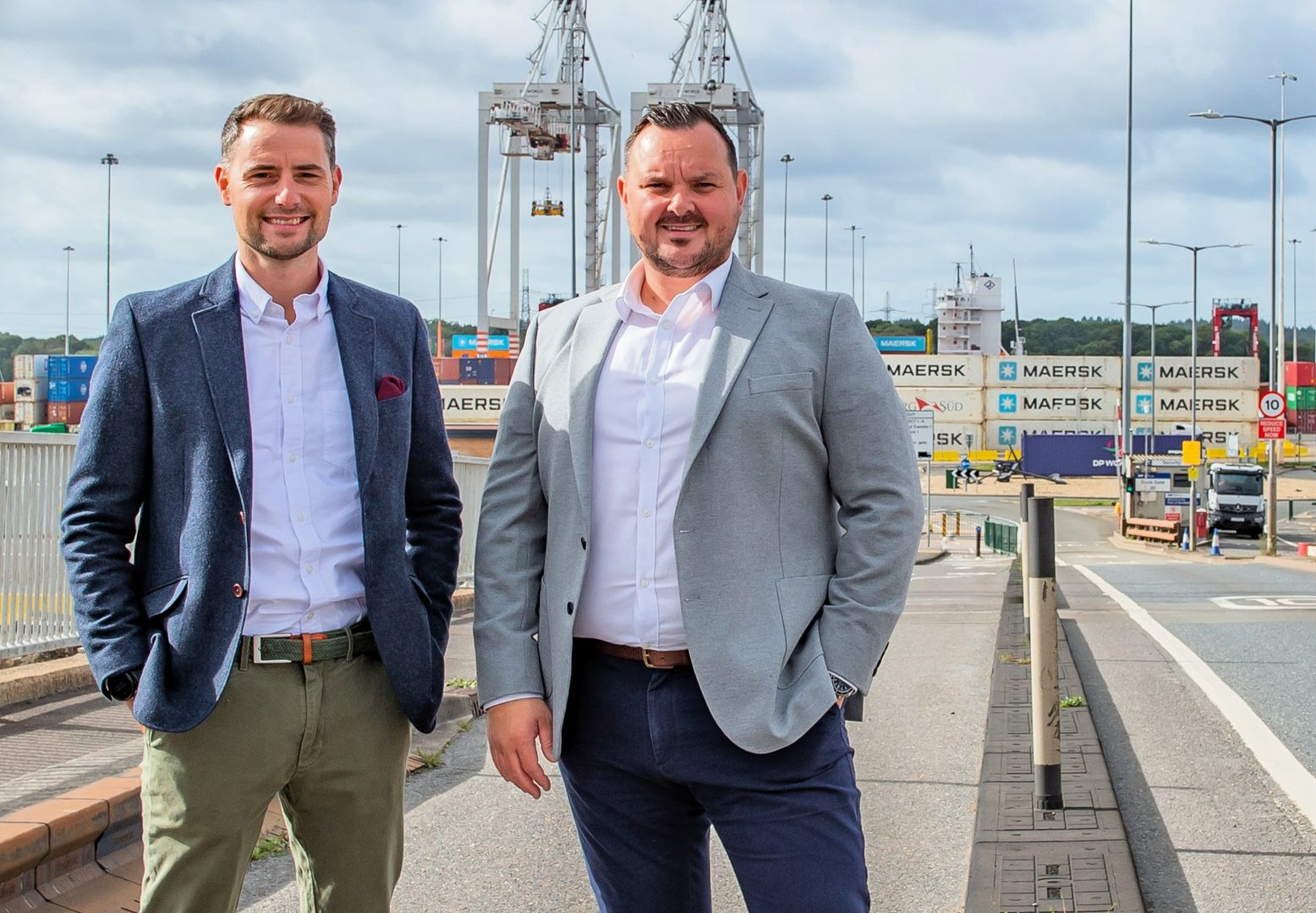
"Traditional agency hiring models are too rigid and are no longer delivering sufficient value and results. Our flexible talent partnerships are built for the pace of change." The Maritime, Technology and Sustainable Energy sectors are evolving at pace. They need a forward-thinking talent partner who understands these shifting demands and can adapt quickly to provide a better service and deliver outstanding results. With decades of experience in maritime and sustainable energy recruitment, we saw the cracks in traditional models. Too slow, too generic, too rigid and focussed entirely on the transaction rather than long term impact. Wavecrest Talent was created to do things differently, we saw an opportunity to build something better. A business rooted in the following principals – We know that no two problems are the same. That’s why our pricing, delivery and engagement models are built to flex without compromising quality or impact. We really listen to our customers, and our solutions are designed around your business, not ours. We take every opportunity to collaborate proactively with our clients and we prioritise your project under a transparent working model which is led by an expert talent professional and company shareholder. We innovate relentlessly, harnessing cutting-egde technology alongside decades of experience to deliver best-in-class solutions. And that’s why clients trust us to represent their brands with credibility in the market. From executive search, embedded talent support, project-based sourcing to global workforce solutions Final thought The world is changing fast. Your talent strategy needs to keep up. If you’re ready for a partnership that moves with you, Wavecrest Talent is here to help.

The maritime industry is in the midst of a seismic shift. Once defined by tradition and legacy systems, it’s now being reshaped by technology, sustainability imperatives, and a new breed of leadership. As an executive search consultant with decades of experience placing senior talent across shipowners, operators, OEMs, and maritime tech startups, I’ve had a front row seat to this transformation. The Tech Tide Is Rising Digitalisation is no longer a buzzword, it’s the backbone of maritime innovation. From AI-powered voyage optimisation and predictive maintenance to autonomous vessels and blockchain-based documentation, technology is redefining how the industry operates. Key trends we’re seeing: AI & Data Analytics : Turning raw vessel data into actionable insights is now a strategic priority. Decarbonisation Technologies : With IMO +442382280099 targets looming, green tech, from alternative fuels to carbon capture, is attracting serious investment. Cybersecurity : As ships become floating data centres, securing digital infrastructure is now a board level concern. Leadership in Flux The profile of maritime leadership is evolving rapidly. Operational experience remains valuable, but it’s no longer sufficient. Today’s leaders must be: Digitally fluent : Capable of championing tech initiatives. Change agents : Comfortable leading transformation in conservative environments. Collaborative : Skilled at building partnerships across tech, finance, and regulatory bodies. We’re seeing a rise in cross-sector hires, executives from aviation, logistics, and fintech are entering maritime, bringing fresh perspectives and digital acumen. Hiring Trends: The Talent Crunch There’s a growing mismatch between the pace of innovation and the availability of talent. Maritime tech firms, especially startups, are competing with Silicon Valley for software engineers, data scientists, and product managers. Meanwhile, legacy players are struggling to attract younger talent due to outdated perceptions of the industry. In-demand roles include: CTOs with maritime + SaaS experience ESG and sustainability officers Product leaders with IoT or AI backgrounds Commercial leaders who can bridge tech and operations What Leaders Want (and Need) In our conversations with C-suite candidates, a few consistent themes emerge: Purpose : Leaders want to be part of the decarbonisation journey and seek companies with a clear sustainability mission. Agility : They’re drawn to organisations that are nimble and not bogged down by bureaucracy. Support : Especially in family owned or traditional firms, leaders want board alignment and real investment in innovation, not just lip service. Advice for Employers If you’re hiring in this space, here’s what I recommend: Broaden your lens : Look beyond maritime. The best candidate might be leading digital transformation in another industry. Invest in onboarding : Especially for non-maritime hires, cultural integration is key. Be transparent : Top candidates want to know your digital roadmap, ESG commitments, and how much real authority they’ll have. Looking Ahead The next five years will define the maritime industry for decades to come. Those who embrace innovation, invest in leadership, and foster a culture of adaptability will not just survive, they’ll lead. At Wavecrest Talent, we’re not just placing people, we’re helping shape the future of maritime. And from where I sit, the horizon looks challenging, yes, but also full of promise.